


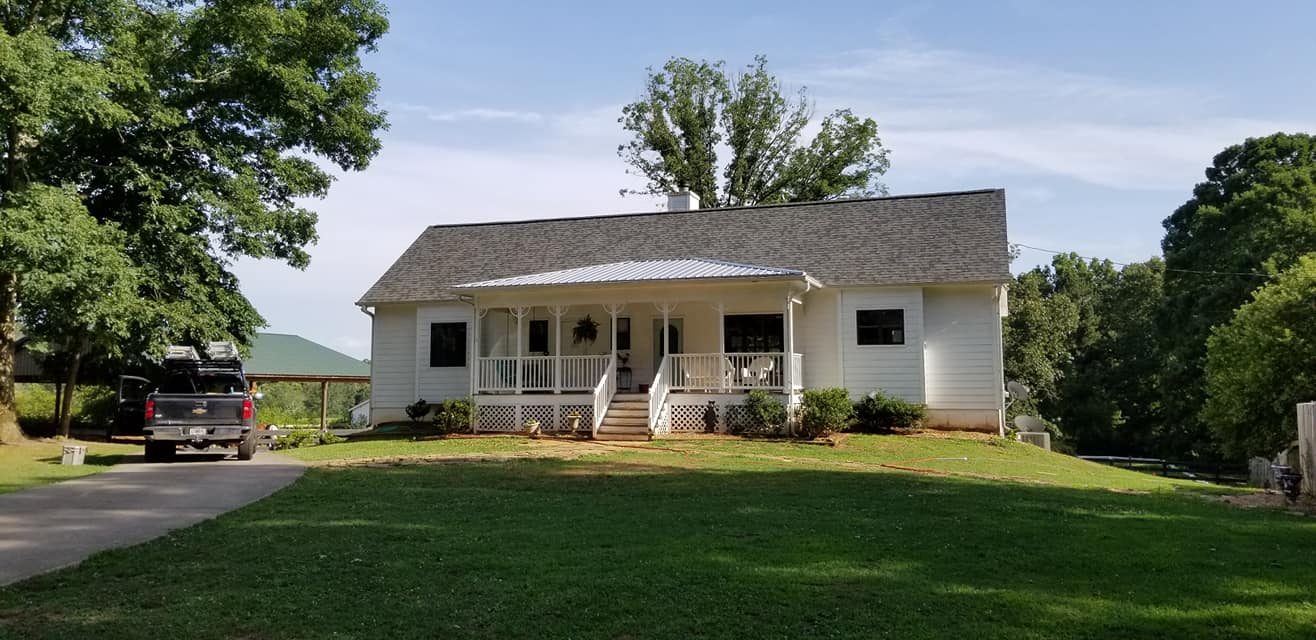

A roof problem does not always mean you need an entirely new roof—but waiting too long on the wrong problem can turn a manageable repair into damaged decking, insulation, ceilings, and walls. For homeowners in Aragon, Rockmart, Cedartown, Rome, Cartersville, and nearby Northwest Georgia communities, the right decision starts with the roof’s condition rather than its age alone.
This guide explains when a targeted repair may be reasonable, when replacement deserves serious consideration, and what a dependable inspection should cover.
When a Roof Repair May Be the Right Choice
A repair can be a practical solution when damage is limited, the surrounding roofing system remains sound, and the cause can be corrected without simply hiding a larger failure.
- A small, isolated leak: Flashing around a chimney, wall, vent, or pipe boot may have failed while the rest of the roof remains serviceable.
- Limited storm damage: Wind may lift or remove shingles in one area without compromising the entire roof.
- A newer roof with a clear defect: A small installation problem or damaged accessory may be repairable if the roof deck and nearby materials are in good condition.
- Minor metal-roof details: Loose fasteners, sealant failure, or a localized trim problem may sometimes be corrected without replacing all panels.
- Gutter-related water problems: Overflowing or damaged gutters can resemble a roof leak. Correcting drainage may solve the problem and protect the fascia and foundation.
The key word is isolated. A patch is useful only when it addresses the actual water-entry point and the surrounding system can still perform. Our roof repair services begin with finding the source rather than guessing from the indoor stain.
Signs That Roof Replacement May Be the Better Investment
Replacement becomes more reasonable when problems are widespread, the roof has repeated failures, or a repair would leave the owner paying again soon.
- Leaks in several areas: Multiple active or previously repaired leaks can indicate a broader roofing-system failure.
- Widespread shingle deterioration: Curling, cracking, missing granules, brittle tabs, or repeated blow-offs across multiple slopes are not truly localized.
- Soft or damaged decking: Rotten or weakened sheathing must be addressed, and extensive damage can make replacement the responsible path.
- Failed flashing throughout the roof: Roof-to-wall intersections, valleys, penetrations, and other transitions work together. Broad failure is difficult to solve with one patch.
- Recurring repair costs: Several repairs in a short period may cost more over time than addressing the full system.
- A planned long-term upgrade: Owners sometimes choose replacement to improve durability, ventilation, appearance, or move from shingles to a properly designed metal roofing system.
For a home with widespread problems, review our residential roofing options. Commercial buildings have different drainage, membrane, fastening, and maintenance needs, so they should be evaluated through our commercial roofing process.
Roof Age Matters—but It Does Not Decide the Answer
Roof age is useful context, not a diagnosis. Sun exposure, ventilation, tree cover, storm history, roof pitch, installation quality, maintenance, and material type all affect how a roof performs. A relatively young roof can fail early if an important detail was installed incorrectly. An older roof may still have useful service life if it was installed well and maintained.
Be cautious of anyone who recommends replacement based only on age or who promises that every leak can be solved with a quick patch. The evidence on the roof should support the recommendation.
What a Useful Roof Inspection Should Examine
A responsible inspection should look beyond the obvious damaged shingle. Depending on the roof and access, it should consider:
- Shingles, metal panels, seams, fasteners, and visible surface wear.
- Valleys, ridge areas, eaves, rakes, roof-to-wall transitions, and flashing.
- Pipe boots, vents, chimneys, skylights, and other penetrations.
- Gutters, downspouts, drip edge, fascia, and signs of improper drainage.
- Attic or interior evidence when accessible, including moisture paths, ventilation, decking condition, and previous repairs.
- Storm-related damage and whether the problem appears isolated or widespread.
An interior stain is often downhill from the actual roof opening because water can travel along decking, framing, or fasteners. That is one reason roof-leak diagnosis requires more than sealing the spot directly above a ceiling mark.
Repair and Replacement Cost Factors
Every property is different, so a website should not pretend that one square-foot price fits every roof. Important factors include the roofing material, total area, pitch, number of levels, valleys and penetrations, tear-off requirements, decking repairs, access, ventilation, flashing complexity, disposal, and chosen warranty or finish.
For repairs, diagnosis time and access can matter as much as the size of the visible leak. For replacements, the lowest proposal may omit necessary decking, flashing, ventilation, disposal, or trim details. Compare the written scope—not just the bottom-line number.
Questions to Ask Before Choosing
- What evidence shows that the problem is isolated or widespread?
- What caused the failure, and will the proposed work correct that cause?
- Which materials and roof areas are included or excluded?
- How will flashing, penetrations, ventilation, cleanup, and disposal be handled?
- What happens if damaged decking or concealed conditions are found?
- What workmanship and manufacturer warranties apply?
- Is the contractor properly insured for roofing work?
Northwest Georgia Weather and Roof Maintenance
Northwest Georgia roofs face strong sun, heavy rain, wind, falling limbs, temperature changes, and occasional severe storms. After a major weather event, inspect from the ground for missing materials, displaced metal, damaged gutters, fallen branches, or debris. Do not climb onto a wet, steep, or storm-damaged roof.
Keeping gutters clear and correctly pitched also helps move water away from roof edges, fascia, siding, and foundations. Learn more about our gutter installation and repair services.
Frequently Asked Questions
Can a roof leak be repaired without replacing the roof?
Often, yes—if the source is limited and the surrounding roof is still sound. An inspection is needed because the visible interior damage may not be directly below the entry point.
Will missing shingles always require replacement?
Not always. A few missing shingles may be repairable, but widespread lifting, brittle shingles, or repeated wind damage can indicate a larger problem.
Should I repair an older roof?
That depends on its overall condition, the cause of the leak, and how much service life is reasonably left. A small repair can still make sense on an older roof, but repeated repairs may not be the best long-term value.
Do metal roofs need repairs?
Metal roofing is durable, but penetrations, fasteners, seams, trim, sealants, and transitions can still need attention. The correct repair depends on the panel system and failure point.
Get a Clear Recommendation
Sullins Roofing & Gutter serves homeowners and businesses across Northwest Georgia. If you are deciding between roof repair and roof replacement in Aragon, Rockmart, Cedartown, Rome, Cartersville, or a nearby community, call 770-895-6435 or use our contact page to request an evaluation. We will help you understand what we find and which option fits the actual condition of your roof.

Leave a Reply